Thursday, May 22, 2008

Puerto Rico’s Moment in the Sun

Op-Ed Contributor
Published: May 22, 2008
Original New York Times article here.

Keith Negley


PUERTO RICO, an afterthought trophy for the United States 110 years ago at the end of the Spanish-American War and an island in limbo since, has become an improbable player in the contest between Hillary Clinton and Barack Obama. Its primary on June 1 could bolster Mrs. Clinton’s claim to a majority of the popular vote — the combined tally for all the Democratic primaries and caucuses held across the country over the past six months.

Puerto Rico’s formal role in the process is indeed weighty. Its 63 voting delegates — 55 elected ones and eight superdelegates — at the Democratic National Convention in Denver this summer will outnumber delegations from more than half the states (including Kentucky and Oregon) and the District of Columbia. Yet Puerto Rico does not have a vote in the Electoral College, nor will its 2.5 million registered voters cast ballots for president in November.

How in the world did this happen? From the beginning, the question of Puerto Rico has perplexed the United States. The island was essential to the defense of the Panama Canal, so we did not make it independent, in contrast to two other Spanish possessions we gained in the war, Cuba (which become independent in 1902) and the Philippines (1946). And we judged it foreign in language and culture — and worse, overpopulated — so New Mexico-style Americanization leading to statehood was out of the question.

Similarly, Puerto Ricans have never resolved their relationship with the United States. For almost 50 years after the Spanish-American War, Puerto Rican sentiment was divided between dreams of statehood and of independence. This ambivalence deterred the island from ever petitioning Congress for one or the other. And until mid-century, sporadic outbursts of violent nationalism haunted the scene.

Partly to put such extremism out of business, Congress in 1948 allowed Puerto Rico to elect its own governor and then in 1950 gave it an intricately designed, semi-autonomous “commonwealth” status short of statehood. Two years later, the island adopted its own Constitution, and Congress quickly ratified it.

Puerto Ricans elect their own Legislature, along with the governor. They enjoy entitlements like Social Security, but they do not pay federal income taxes. They retain their own cultural identity (Spanish is the prevailing tongue) but live under the umbrella of the American trade system and the American military. They have been citizens since 1917, but they have no vote in Congress or for the presidency.

The man who brought forth this unique arrangement, which has come to seem permanent, was Luis Muñoz Marín, who dominated Puerto Rico’s politics beginning in 1940. In 1948 he became the island’s first elected governor. He won three more terms and could easily have been “president for life.” A stretch of 116th Street in Manhattan’s Spanish Harlem is named Luis Muñoz Marín Boulevard in his honor.

Muñoz was an eloquent advocate of independence until, faced with daunting statistics at the end of World War II, he concluded that Puerto Rico’s impoverished economy could not support nationhood. So he began packaging his third-way brainchild.

When pitching commonwealth on the mainland, Muñoz — an artist of words and imagery who also enjoyed a drink or two — would observe that Puerto Rico is the olive in the American martini. The phrase went down well in Washington, but Muñoz used different language at home. Neither Congress nor the American courts have ever embraced Muñoz’s Spanish-language phrase for “commonwealth,” universally recognized in Puerto Rico: “estado libre asociado,” or free associated state. Those three words suggested an autonomy (or even statehood or independence) beyond what came to pass. But Muñoz was too popular on the island for that to cause him trouble.

Still, Muñoz always intended to bring “enhanced autonomy” in trade, self-governance, taxation and entitlements to Puerto Rico. But Fidel Castro’s seizure of power in Cuba in 1959 moved Washington’s attention away from the commonwealth.

Muñoz left office in 1965. His dreams faded. The economy he jump-started went flat. Today, the government accounts for 30 percent of Puerto Rico’s work force (compared with 16 percent on the mainland).

Then in 1974, the Democratic National Committee and some shrewd local political strategists came up with an idea for how to play to lingering discontent over the island’s status: Why not make nice with Puerto Rico (and, as important, with the Puerto Rican vote in American cities) by awarding it the number of delegates to the Democratic presidential nominating convention that its population would yield as a state? But not until this year has a presidential race been close enough, long enough, to yield Puerto Rico a role in the endgame.

On the island, politics is focused on the longstanding deadlock between the two dominant parties, whose identities — one is for statehood and one is for enhanced autonomy — today bear no relation to those of the Republicans and Democrats in the 50 states. Mrs. Clinton and Mr. Obama are, gingerly, bidding for support from both of them.

But the mainland population of Puerto Ricans (like the island’s, almost four million) is watching, too. That fully enfranchised constituency is up for grabs in November. Republicans have fished in these waters, too.

Presidential candidates usually offer Puerto Ricans hazy promises that are sure to be unfulfilled. First on the list: We’ll do whatever you want about the island’s status if you deliver us an overwhelming majority for one or another option. That’s not going to happen.

Since 1967, public support on the island has seesawed inconclusively between statehood and enhanced autonomy — a better version of the deal they already have. Muñoz’s commonwealth helped eclipse independence; that course enjoys only limited support today. An overwhelming majority of Puerto Ricans wants, one way or another, to be American.

The next president could just appoint another commission, more high-level and forceful than past ones, to reopen the dormant question of Puerto Rico’s status. But there is an additional option.

Fidel Castro is gone from office, Hugo Chávez’s influence is growing, Brazil is becoming an oil power, and the United States has no Latin American policy to speak of. John F. Kennedy wisely turned to Puerto Rican leaders to help him frame a new policy for the region in 1961. Similarly, the next president could ask Puerto Rico, with its democratic tradition and its past success with economic development, to help us plan for the post-Castro Caribbean.

The United States is overdue in re-engaging with this special place, which landed in our lap as a stepchild of imperialism in 1898, and which we have never seen clearly.

--
Michael Janeway, a former editor of The Boston Globe and a professor of journalism and arts at Columbia, is writing a history of the United States and Puerto Rico in the 20th century.

Tuesday, May 13, 2008

His Panic

Original Story.


In this insightful, well-researched book, Peabody and Emmy® Award-winning journalist Geraldo Rivera examines the growth of the Hispanic population in the U.S., fueled partly by what may be the single most divisive issue in America today: illegal immigration. With objective clarity and personal conviction, Rivera sheds light on an issue that is muddled with confusion and prejudice—and too often blamed for everything from terrorism to welfare.

His Panic: Why Americans Fear Hispanics in the U.S., is the first book published by Celebra, the first Hispanic celebrity imprint. Celebra will mirror both the language mix of the Hispanic population as well as that of the book buying market, publishing all of its books in English with a portion of its list translated into Spanish.

Read chapter one from His Panic.

1

Proud to Be an American

First, let me tell you my family's story, just one Hispanic family among millions. Like the overwhelming majority of immigrants, Hispanic or otherwise, the Riveras of Puerto Rico worked hard, served our country in many different ways, and made enormous efforts to assimilate, despite the obstacle of prejudice.

My dad always wanted to fit into America, his “new” country. Well, technically the country wasn't new, because U.S. citizenship had been bestowed on him and all current and future Puerto Ricans by legislation called the Jones Act of 1917. The United States had been in possession of the lovely tropical island it had conquered and won from Spain for only twenty years, and Cruz Rivera was just two years old, the sixth of seventeen children born to Juan and Tomasa Rivera of Bayamon, Puerto Rico.

“How could you have so many children?” I remember asking my grandmother, a woman of enormous patience and good humor who wore her snow-white hair pulled back, contrasting dramatically with her angular, chocolate-colored face made leathery by the sun. “Times were different then,” she replied in fabulous understatement, referring to their modest agrarian lifestyle in the sugarcane and coffee economy that dominated the island in the days before the commonwealth. My grandfather helped manage one small operation, and each child became another income earner, cutting and stacking cane, watched over by a slightly older sibling.

With citizenship bestowed, the new Americans were free to roam and the Puerto Rican diaspora began, with island residents leaving their then largely rural society for the far-flung corners of the industrialized mainland United States. Most, like my dad, came to New York City.

When the now twenty-one-year-old Cruz arrived on board one of the New York and Porto Rico Steamship Company's “banana boats” in 1937, more than fifty thousand of his fellow islanders arrived here. The number had been higher, nearly double in the earlier decade, but the Great Depression had unleashed a torrent of bitter racism toward the newcomers, who, like the immigrants of today, were thought to be stealing jobs from “real” Americans. So thousands had gone home to the island. My dad and several of his siblings were determined to stay.

He met my mom, Lilly Friedman, at Stewart's Cafeteria on Sixth Avenue and 42nd Street. He was a counterman there; she was a pretty brunette from Jersey City who cleared dishes and waited tables. She is Jewish, he was Catholic, but he spoke English fluently, having learned as the valedictorian of his Bayamon high school. He proposed marriage, promised to convert to Judaism (which as a lay deacon of the church he never got around to doing). He had been on the mainland for only three years and was keen on assimilating, becoming even more American.

To that end, and to ease the angst of my mom's parents over their daughter marrying a man whose name, Cruz, translates into “Cross,” he adopted the name of Allen, becoming Allen C. Rivera when he married. “Why Allen?” I asked my mother. “When he came here he was ridiculed and put down. He was called Chico or Pancho and it really upset him. He just wanted to be an American. And he spoke English perfectly, with no accent at all, except when he was on the phone. So he never wanted to speak on the phone.” My parents went so far as to give my older sister, Irene, and me the last name Riviera, as in the French or Buick Riviera, to further disguise our roots. It was the only thing they ever did that I'm still mad at. No one was fooled. All it did was confuse our school records, and by the time my brother Wilfredo arrived from Puerto Rico and my sister Sharon and brother Craig were born, the artifice was dropped.

Dad and Mom worked hard and we moved from Orchard Street near the main thoroughfare of Houston Street on the Lower East Side of Manhattan to a small apartment in the Williamsburg section of Brooklyn. It was a perfect neighborhood for our blended family. It was divided by Broadway, the teeming boulevard under the elevated subway that sliced through two radically different neighborhoods. One side of the street was nearly all Puerto Rican, the other was almost all Orthodox Jewish. The family joke was that we were the only ones who could cross the street with impunity. Then in 1944, Pop got drafted.

Like many Puerto Ricans during World War II, he served honorably in the army, restricted as many Hispanics were in those days of military segregation to kitchen duties. “He was stationed out in Sacramento,” Mom told me. “When his unit was being shipped out to Okinawa, the people running the Officers Club where he worked wouldn't let him go. They loved his spicy cooking. Otherwise the army food was so bland.”

After the war, Dad drove a New York City taxi until, with the benefits of the G.I. Bill, my parents were able to buy a modest home for $8,000 in a blue collar neighborhood in West Babylon, Long Island. With his own extended family, Wilfredo still lives in the old house our family bought in 1950.

On Long Island, Dad got the job that helped him ease us into the upper working or lower middle class, supervising the largely Puerto Rican kitchen staff of the cafeteria concession of the Republic Aviation Corporation in the town of Farmingdale. Now defunct, it was where they built the F-84 Thunderjets used in the Korean War and later the F-105 Thunderchiefs that saw service in Vietnam.

During the booming postwar economy of the 1940s and early 1950s, the Puerto Rican population in the States recovered dramatically, skyrocketing to well over a half million, still mostly living in New York. Puerto Ricans were on the traditional immigrant track to assimilation. But as the community grew, because of factors largely out of its control, so did economic and social tensions. While many people had been gainfully employed in the expanding postwar economy—women mainly in the garment industry, men like my father in hotel and restaurant kitchens—the accelerating shift of manufacturing jobs out of the inner cities displaced and impoverished many Puerto Rican and other immigrant families.

Ironically, an equal but opposite phenomenon was unfolding back on the island. There a government program called Operation Bootstrap was moving agrarian families off farms and sugar plantation and into cities, where they were lured by jobs in newly subsidized industries. While there are obviously widespread and sometimes spectacular exceptions, in some ways the inner-city segment of both communities never recovered, many falling into a trap of welfare dependency, broken families, and drug and alcohol abuse.

Still, despite income levels lower than those in the States (median family income for 2006 was measured at $20,045 in Puerto Rico while the lowest state was Mississippi at $42,805), and an economy far too dependant on public jobs, there is enormous pride of place. We call our band of brothers and sisters Boricua, which derives from Boriken, the pre-Columbian, Taino Indian name for the island. Visited by Christopher Columbus during his second New World voyage in 1493, the lush, mountainous, and now crowded little island's heart is her capital, major port, and the oldest city under the U.S. flag, San Juan. On its modern outskirts, there is the usual collection of tourist hotels lining the beautiful Atlantic beaches, although curiously lacking are the kind of supercasinos that are remaking cities like Las Vegas and Atlantic City. The heart of the old city, though, is unmatched by those synthetic meccas. It is a charming, 465-year-old neighborhood within the old walled section built to withstand invasion. There, with cobblestone streets, elegant government buildings, and hundreds of carefully restored sixteenth- and seventeenth- century Spanish colonial structures surrounded by La Fortaleza and other massive fortifications, the best of life under Old Spain is easily conjured.

Too much of the rest of the island has fallen under the plows of random development, urban poverty, and grinding, often chaotic traffic, although lovely pockets remain. As an expression of solidarity with the land of my father and his father for generations out of memory, several years ago I bought an undeveloped mangrove island off the south coast we use for vacations and enormous family reunions. A mile-square jewel located three miles off the modest coastal village of Salinas, I intend gifting it to the people of the commonwealth as a park, and to be buried there.

What is fascinating, given the island's profound social problems, is how satisfied Puerto Ricans seem with their lot in life. We invented irrational exuberance. To prove that thesis, just watch one Puerto Rican Day Parade in New York City. It is billed as the world's largest, with as many as half a million marchers watched by 2 million of their closest friends. The colorful pageant is a giant demonstration of pride in community. I've marched in at least two dozen going back to 1971, and was once honored as Gran Mariscal, the grand marshal. It was one of my dad's proudest days, even though a torrential downpour that drenched Fifth Avenue interrupted the procession midway.

While we certainly have our share of strivers and success stories, curiously we are among the least envious, most inherently happy people on the planet, content to make a living, make love, and debate politics. Without bragging or being condescending, there is an openness and innocence about Puerto Ricans that in all my world travels I have found unmatched. Strangely, in my experience it is Afghans who come closest to our extraordinary willingness to welcome strangers and our perhaps disproportionate hometown pride of place. Italians and Lebanese also come close. One Puerto Rican's success is every Puerto Rican's success. Again, if you don't believe me, watch the parade just one time and see how it seems to be a gigantic family gathering. When the young and old, men and women cheer Jennifer Lopez or Ricky Martin, they do it without an ounce of insincerity or envy, only pride.

If our only ambition for education and achievement matched our compassion and ability to love. In his book, The Governor's Suits, my longtime friend and confidant Dr. Guillermo Gonzalez, an island-born and -trained psychiatrist, believes that part of the reason for our community's tranquility is that as the world's oldest continuous colony, claimed for Spain by Christopher Columbus on November 19, 1493, and invaded by the United States on July 25, 1898, someone has always been in charge of us. As a child prospers emotionally in the absence of anxiety and responsibility, our centuries-long colonial status has meant less stress for us. The big bad world wolf is not our problem. But we have sacrificed self-determination and drive for tranquility, the assurance that Uncle Sam will always take care of us.

My first professional hero, role model, and mentor, Herman Badillo, the first Puerto Rican congressman, is even more pessimistic about our community's current plight. Badillo blames our persistent social problems and relative lack of success on an addiction to entitlements and preferential public programs, like bilingual education and open admission to public colleges, programs he not only benefited from, but, until leaving the Democratic Party and becoming a late-in-life Republican, also championed. “We act as if our New York neighborhoods were part of Puerto Rico,” Herman told me in an interview. “We haven't taken advantage of the assets we have available to us here, like the City University. We're becoming part of a permanent underclass.”

Widely criticized by current community leaders like the fiery congressman Jose Serrano and former Bronx borough president and losing mayoral candidate Fernando Ferrer, Badillo has written a scathing but not entirely mistaken commentary on our current situation entitled, One Nation, One Standard: An Ex-Liberal on How Hispanics Can Succeed Just Like Other Immigrant Groups. In the book, Badillo points to the relative success of our cousins from the nearby Dominican Republic (DR). They didn't have the same advantages we did when they got here. The DR was suppressed for years by a series of brutal dictators, principally Rafael Trujillo, who ruled with an iron hand from 1930 until he was assassinated in 1961. The island nation, which is next door to Puerto Rico and separated only by the sixty-mile-wide Mona Passage, is now free and unfettered. Unlike Puerto Ricans, who are U.S. citizens all, many Dominicans came to America as visitors or trespassers with no advantages, but with immigrant vigor. They are now turning vast swaths of New York City into upwardly mobile enclaves. Once a ghetto, Washington Heights is a thriving Manhattan neighborhood heading straight into the middle class thanks to its hardworking residents, largely from the DR and Mexico. Unmistakably Latino, the Heights are a vastly more stable, safe, and prosperous neighborhood than they were just twenty years ago.

I respect Herman and Guillermo tremendously, but I see the root of our problem in our ambiguous status. Puerto Rico is neither an independent country nor a state of the union. We get many of the benefits nationhood or statehood would bring, but not the responsibility or respect. Our island is a stepchild in the family of nations, charming, ebullient, and attractive, but a stepchild nevertheless. And until that status is resolved with independence or, my preference, statehood, the stubborn social problems will persist as they have for more than half a century. The stepchild needs to grow up and become an equal member of the American family. To mix metaphors, Puerto Rico has to pick a lane.

When the Ozzie and Harriet ideal was sweeping the nation in the Eisenhower days, hard times in the inner city intensified residential and racial segregation, crime and unemployment increased, public schools spiraled downward. I have an image of my dad coming home from work in the afternoon and scouring the crime stories in our hometown newspapers, Newsday and the Long Island Press, hoping that the perpetrator of some particularly vicious act was not a Puerto Rican or other Latino for fear that the dirty deed would only make our efforts at assimilation more difficult.

My father's response to the growing discrimination and backlash against the community was to align our family with the Anglo mainstream, becoming suburban “us” to the inner-city barrio's “them.” His fear of being racially stereotyped and his malignant communal shame at any dreadful or embarrassing act committed by any Hispanic is something I can never forget. As a young adult, it was what caused me to reject his cautious assimilation and adopt a flamboyant ethnic identity, growing a moustache I haven't shaved in forty years, habitually wearing a Che Guevara-like purple beret, permanently becoming Geraldo (don't call me Gerry unless you want a fight), and throwing my lot in with grassroots East Harlem radical group called the Young Lords.

Actually, I forced myself upon them. I graduated from Brooklyn Law School, interned at a community legal services office in the heart of Harlem at 116th Street and Eight Avenue, and then became the cochairman of an activist group of minority lawyers we called the Black and Brown Lawyers Caucus. In August 1969, I gained radical credibility when our group literally seized Donald Rumsfeld. The future two-time secretary of defense was then head of the Office of Economic Opportunity (OEO). We all worked for Federal Legal Services, which was part of the OEO so Rumsfeld was our ultimate boss. As part of a larger movement to protest Nixon administration policies toward the poor (which included us), we invaded and occupied Rumsfeld's Washington office, holding him captive until we were all arrested. Hosting an inaugural gala for the wounded veterans at Walter Reed Army Medical Center in D.C. in January 2004, I recounted the story for the secretary and a group of generals. I got big laughs.

But in the day, there was nothing funny about our commitment to radical social change. By 1968-69, the Young Lords were advocating community services, like free breakfast programs and testing for lead-paint poisoning for neighborhood children, campaigning for the independence of Puerto Rico, occupying a local hospital that was notorious for substandard care, confronting local police and other authority on the behalf of barrio residents, seeking common cause with similar civil rights and antiwar activists around the country in a grand, multiracial Rainbow Coalition, and idealizing a semi-socialist society. The Lords were led by a unique combination of college-educated activists and several street-smart, old-school leftist organizers. Some of the former are still active in public life, like the poet and commentator Felipe Luciano, the New York Daily News columnist and former head of the National Association of Hispanic Journalists Juan Gonzalez, and the WCBS correspondent Pablo Guzman. The Lords were the first homegrown—that is stateside—Puerto Rican activist group concerned with social issues like poverty and police brutality rather than focusing, as most PR groups did at the time, on the island's independence.

The Lords were getting press and not all of it was bad, staging protests, organizing confrontations with the local precincts, and dealing aggressively with the somewhat sympathetic administration of Major John V. Lindsay. At the time the group was being represented by several traditional young white lefties from the Lawyers Guild. That's when I forced myself upon them, rushing into their office, typical of the 1960's—a smoky, crowded, and poster-filled room in the shadows under the Park Avenue elevated train—and demanding that since I was the only Puerto Rican radical lawyer around who was their age, they were mine to represent. They were bemused—some still tell the story—but my offer/demand was accepted.

In May 1970, the Lords seized possession of the block-square building owned by the Spanish Methodist Church on 111th Street and Lexington Avenue in the impoverished, almost exclusively Puerto Rican “El Barrio” neighborhood. I was often their spokesman, and in that role was interviewed on the Today show. The church is still there, and though the neighborhood has somewhat gentrified, and like many in New York and elsewhere is much more Mexican than in the old days, it retains its rough ghetto edge. Well-maintained public housing faces rehabilitated tenements; larger markets sit side by side with the traditional bodegas, and there are combination grocery-department stores where you can still cash a check, buy a whole pig for roasting, and overpay for almost everything.

In nice weather there are scores of mostly poor people on the street; the cops watch the action up and down Lexington Avenue with an eye-in-the-sky crane on which an officer sits in a glass enclosed perch thirty or so feet up. On the streets below, the legend of the Young Lords is passed down from generation to generation. The seizure of the church almost forty years ago has become the stuff of local lore, one of those seminal events that everybody remembers and many claim to have participated in. Over the years, many strangers have come up to me to say that they were there, although like a Puerto Rican Mayflower, they couldn't possibly have all fit in.

On the air giving interviews during that crisis, my job was to explain the benevolent nature of the group's seemingly hostile act: that the Lords wanted to put the church complex to work for the community. The congregation, many of whom had prospered and moved out of the city, kept the buildings shuttered during the week, only using the sanctuary for Sunday services. The building takeover was not unusual for those turbulent times. The Kent State National Guard shootings had just taken place and the nation was frequently disrupted by antiwar demonstrations and plagued by urban unrest.

I was spotted on television by Al Primo, the founder of WABC's Eyewitness News, who was foraging for a news team that reflected the diverse community it served. The only other Puerto Rican on television at the time was a local CBS reporter named Gloria Rojas, and she recruited me into the business. Primo hooked me up with the legendary newsman Fred Friendly for a crash course at the Colombia University Graduate School of Journalism.

As my urgent ethnicity and radicalism simmered down during a four-decade-long public career, what remained was a reflex opposition to racial and ethnic stereotyping. That stance has frequently brought me into highly publicized, sometimes violent confrontation with hatemongers from the KKK to neo-Nazis and skinheads advocating white power and terrorizing minorities. There aren't many people in this country who have been called both a Spic and a dirty Jew in the same street brawl with neo-Nazis, as I had the pleasure of being in Janesville, Wisconsin, in 1992.

Right now in America, the group being singled out for the most destructive negative emotion is Hispanic immigrants, both legal—families who have been in the country for generations—and illegal—people who may have crossed over the border yesterday. All this destructive hostility is the manifestation of what is now a national panic. Despite this hate, I can say that as a proud Puerto Rican, I am proud to be an American.


Monday, May 12, 2008

The other side of Puerto rico

Originally published May 11, 2008
Original article here.

By Jim Breuer
Special to the News-Post

The other side of Puerto Rico
Photo by Jim Breuer

The flight from Baltimore/Washington Interntional Airport to San Juan takes a little over three hours. Upon arrival you are greeted by sun and light and affable, enthusiastic people.

Luis Mu?oz Mar?n International Airport is on the island of Isla Verde, on the northern, Atlantic side of Puerto Rico, the very spot that is host to scores of high-rise hotels, gorgeous beaches and world-class restaurants.

For many of us, this is where the journey ends. After all, you're within a stone's throw of stirring Old San Juan, an easy drive to El Yunque National Forest and some of the best golf courses you'll ever play. So why bother driving an hour south to the Caribbean side?

For starters, it's as different from the northern side as the jungles of Queensland, Australia, are from the hills of Oregon. The backbone of Puerto Rico is the Cordillera Central, a range of mountains running roughly east to west that's high enough (5,000 feet) and steep enough (most grades over 50 percent) to engender a couple of microclimates: mountainous and wet in the north, mountainous and dry in the south.

It's in the south that we find Ponce, the island's second-largest city, multiple funky little towns, and Guayama, to the east of Ponce by 45 minutes or so. There we find El Legado Golf Resort, home of its founder, golf pro Juan "Chi Chi" Rodriguez.

Chi Chi's legacy, El Legado

Rodriguez, 72, is a member of the World Golf Hall of Fame, and winner of eight PGA Tour championships and 22 senior tour matches. Unlike a lot of guys on the PGA tour, Rodriguez didn't come from money. In fact, as a kid he cut sugar cane, backbreaking work considered one of the island's least desirable jobs.

El Legado itself occupies 285 acres on the fairly flat lands close to the Caribbean. The name means "the legacy," and it's clear that Rodriguez means it to be his gift to his native island. It's a complex consisting of a golf course, a swimming pool, beautiful apartments and eventually a hotel and casino. In all, it's a $100 million project.

The course is a fairly wide open one, with a surprising amount of water. Designed by Rodriguez himself, it plays 5,670 yards from the red tees, 6,369 from the whites and 7,262 from the blues. If that's not enough challenge for you, there are also yellow tees set an average of 30 yards behind the blues. The fairways are durable Bermuda grass.

The course's signature hole is the par-3 No. 1, where players must hit over a pond that's shaped like Puerto Rico to reach the hole. Carts are required, and it's a good thing, because the course is laid out over such a wide area that walking would be nearly impossible (think Greencastle Greens in Pennsylvania), especially in the hot Puerto Rican sun.

The villa apartments range from one to three bedrooms and are available for sale or rent. They feature fully-equipped kitchens, 8-foot ceilings and tile floors. The pool is a magnificent kidney-shaped affair with continuously running fountains and adjacent kids' pool and Jacuzzi.

Driving and shopping

on the island

You'll be disappointed if you expect driving conditions like those in Guatemala, where the roads have more potholes than road, or the Dominican Republic, where traffic laws are considered suggestions. Here the roads are considerably better than the ones in Pennsylvania, and drivers are, for the most part, considerate. From a safety standpoint, if your choice is to drive Route 52 from San Juan to Ponce or U.S. 15 from Emmitsburg to Frederick, jump on the former without hesitation.

Grocery shopping in Guayama is just like that in Frederick É in 1956. You can have any kind of lettuce you want, so long as it's iceberg. Want a baguette? Fugeta-boutit, in fact, ditto for rye, pumpernickel, bagels and pretty much everything that's not the local version of Wonder Bread.

The best coffee available is Bustelo, which beats Maxwell House, but isn't exactly Starbucks French Roast. Your best bet to take advantage of next time you're in San Juan is the the Pueblo Supermercado on Isla Verde. No promises, but at least they serve a more upscale and varied clientele.

Guayama: Frederick

of the Caribbean?

Guayama and Frederick have their similarities. They have similar populations (Guayama 44,000; Frederick 59,000) and founding dates (Guayama 1736, Frederick 1748). In both cases, the old parts of the cities are the most interesting, and both are surrounded by "Anywhere, USA" streets where one can find a Wal-Mart, a Radio Shack, a Marshalls, etc. Frederick has probably done a better job at attracting and retaining interesting retail establishments to its downtown, yet Guayama's old city is not without its attractions.

Where would any Latin American city be without its central square, in this case the Plaza de Recreo Crist?bal Col?n? Its ornate central fountain, brought from France in 1918, is surrounded by 16 gardens that feature unusual trees, many of which were planted in 1895.

The beautiful Church of San Antonio de Padua is the only church built in the Neo-roman style in Puerto Rico. The inspiration to construct the church supposedly came from the appearance of the saint over a guava tree at the site where the church now stands. Its Swiss-made clock strikes each day at exactly 11:30, the hour at which the church was consecrated.

The Casa Cauti?o Museum is a study in ornate elegance. Also on the central square, the museum combines a turn-of-the century fa쳌ade with neoclassical architectural design mixed with native architecture. It was completely restored by the Puerto Rican Cultural Institute in 1987.

Interestingly, Guayama is also home to significant pharmaceutical manufacturing, the densest concentration in the world, according to John Terry, automation engineer for Niro Pharmaceutical Systems and Frederick resident. Many impressive (if slightly unsightly) factories line the coast. Originally attracted here in the '60s and '70s by tax incentives, the industry is currently experiencing a bit of a downturn. As elsewhere, consolidation is happening. There have been a few plant closings and the laid-off workers have a hard time finding comparable jobs on the island.

Restaurants in Guayama: Good news, mostly

No one who visits the Guayama area should miss the Casa de los Pastelillos (www.casadelospastelillos.com) in Pozuelo. Situated beneath the palm trees on the Caribbean beach, the open-air restaurant boasts 26 varieties of pastelillos -- fried turn-overs filled with anything from flank steak to mud crab. Both are delicious, especially when washed down with a Medalla, the local beer -- way better than an American lite beer but not up to Heineken standards.

For good local fare, try Vino y Candela, La Fuente Town Center, 787-864-256. They specialize in the ubiquitous mofongos rellenos, a plantain-based dish that can be combined with just about anything. They also serve a variety of grilled meats, seafood and comidas criollas, or local specialties. Happy hour with live music takes place there on Fridays.

The best steak in town can be had at Doble Seis, right on Route 53. It used to be a restaurant for the attached hotel, but it became a sports bar, complete with multiple TVs on ESPN and the like, and also plenty of video games lining the walls. However, the chef is still the same. If you like or can tolerate the sports bar scene, it's the place for you.

Highly recommended to us in Salinas was Puerta al Sol, which sits right on the ocean, and where you can dine on the water in an open-air veranda. Salinas is one of the aforementioned funky towns between Guayama and Ponce, and the atmosphere of the town is worth taking in. However, both times we went there the seafood was overdone. I like my red snapper flaky, not suitable for use as a weapon.

Ponce, Pearl of the South

Ponce, the second largest city in Puerto Rico outside of the San Juan metropolitan area, was founded in 1692, and has a population of 186,000. It is named after Juan Ponce de Le?n y Loayza, the grandson of Juan Ponce de Le?n, he of Fountain of Youth fame.

The city's vibrancy was portended by the fact that it was a favored immigration destination for not only Latin Americans but also Spain and much of the rest of Western Europe (one of Vanna White's ancestors was mayor of the city once). Up until the turn of the 20th century, Ponce had more inhabitants and its many financial institutions were better capitalized than those of San Juan.

Many of the immigrants from Spain were Catalonians, and much of its architecture reflects the quirky attributes of Barcelona. Foremost among these is the firehouse-turned-tourist-center Parque de Bombas. The building, with its striking red and black fa쳌ade and clunky yet somehow pleasing shape, can serve as your jumping off point for a walk around the pretty downtown area.

Conveniently, you are located on the Plaza de las Delicias, the old city's central square. It features several fountains (namely the "Lions Fountain"), and the Ponce Cathedral, in addition to the Parque de Bombas. Other buildings around Ponce's main plaza include Casa Alcald?a (city hall), the oldest colonial building in the city, dating to the 1840s.

Not to be missed (especially if you speak Spanish, for the English blurb they hand you is inadequate) is the Ponce History Museum. As North Americans, we tend to think most of Western Hemisphere history revolves around the U.S. Visiting a place like this can be a refreshingly Copernican experience.

After taking in the museum, have a meal just across the street at Caf? Tom?s (corner of Mayor and Isabel streets, 787-841-4768). They specialize in Creole and seafood cuisine, but try the steak Tom?s.

The Ponce Museum of Art is the only museum of international stature on the island, housing the most extensive art collection in the Caribbean. Its best-known painting is "Flaming June" by Frederic Leighton. For those of us whose knowledge of the visual arts is rudimentary, it's a great place to visit. Informative placards accompany most works of art, and it is the kind of museum that you can tour in an hour without feeling like you've shortchanged yourself. Try that at the Prado or the Louvre.

Another planet: The dry forest of Gu?nica

To the west of Ponce lies the Gu?nica State Forest Designated (Natural Reserve Area), a United Nations International Biospheric Reserve. Here average annual rainfall is a scant 35 inches É compare with 15 feet deluging the mountain forests each year. The result is a dwarf forest consisting of various species of cacti and semi-deciduous plants, many of which have been twisted by the harsh micro-climate into fascinating natural bonsais.

Ironically, though it seldom rains here, it is water that shapes this forest of over 700 plant species. When rains do come, they tend to occur in short bursts. What water isn't evaporated in the hot tropical sun rapidly percolates through the limestone bedrock. Here Puerto Rico's 200-million-year-old volcanic past is evident just by looking down. The rain-pitted and broken limestone is readily visible everywhere. Here, too, is one place where one finds some ecological good news: although much of the dry forest was destroyed for agriculture before the 1940s, those areas that have been left alone have recovered rapidly, so that after 50 years forests that had been used for charcoal production recovered to the point where they are now indistinguishable from much older forests.

Somehow there's an analogy for Puerto Rico itself here. Just as early 20th-century American politicians tried to make the island into something it was not, sometimes we tourists are guilty of the same É in our minds at least. The key to appreciating a place like this is to avoid trying to mentally align it with our expectations É the tropical paradise of the tourist brochures, for example. Puerto Rico will be fine É just as it is.

El Gran Combo de Puerto Rico: You have got to dip into this salsa

By Paul de Barros
Seattle Times jazz critic

Original article here.

Photo by SHANNON DUDLEY

With its 40-year-plus legacy of more than 50 albums, including a Grammy-winning 40th anniversary concert disc, El Gran Combo is the real deal — salsa as it has been danced to in Puerto Rico, Panama, Venezuela, Colombia, Curaçao and beyond for more than four decades. With saxophones, trumpets and trombone answering the call of an infectious vocal trio — which in turn follows its own lead-and-chorus patterns — and a thicket of percussion thrusting the music forward, El Gran Combo creates an irresistible mix for dancing or listening.

Known popularly as "The University of Salsa," because so many great players have passed through its ranks, El Gran Combo originated in a 1962 split-off led by pianist Rafael Ithier from the Afro-Puerto Rican band Cortijo y su Combo, which introduced black genres into Puerto Rican pop music. The group's first album, "Acángana," went gold in 1964. Shortly thereafter, the band was playing at New York's legendary Palladium with Tito Puente, Tito Rodriguez and Machito.

El Gran Combo's fame was solidified via regular appearances on an afternoon TV show in Puerto Rico. So ingrained in Puerto Rican culture is this band that its songs have given rise to many popular sayings, including "Este muerto no lo cargo yo (I don't carry around that corpse)," from the song "Don Goyo," which translates as, "I wash my hands of that problem."

Though the band continually brings new material into its repertoire, it still performs classics such as "No hay cama pa'tanta gente," "Un verano en Nueva York" and the humorous "El caballo pelotero." The group's coordinated dance routines are a visual delight. This is a no-miss event.

The EMP exhibit will be open tonight and is included in the price of the concert.

Paul de Barros: 206-464-3247 or pdebarros@seattletimes.com

Copyright © 2008 The Seattle Times Company

Tuesday, April 29, 2008

EPA Applauds Environmental Champions in Puerto Rico

WEBWIRE – Monday, April 28, 2008
To view original article click here.

(New York, N.Y.) Eleven individuals and organizations from Puerto Rico received top honors today from the U.S. Environmental Protection Agency (EPA) for their work to protect the environment. Their exemplary efforts were recognized as they were presented with EPA Environmental Quality Awards by EPA Regional Administrator Alan J. Steinberg during a ceremony today in EPA’s New York offices. In addition, the Agency recognized two recipients from New York for winning the nation-wide President’s Environmental Youth Award (PEYA).

“These exemplary environmental stewards have gone above and beyond for environmental change in local communities,” said Regional Administrator Alan J. Steinberg. “Let their extraordinary contributions remind us all that we can make our world a better place and individuals really inspire others and make a lasting difference.”

EPA selects Environmental Quality Award winners from non-profit environmental and community groups, individual citizens, educators, business organizations and members of the news media, as well as from federal, state, local or tribal governments and agencies. The honor is given to those individuals or organizations that have made significant contributions to improving the environment and public health in EPA Region 2, which covers New York, New Jersey, Puerto Rico, the U.S. Virgin Islands and seven federally-recognized Indian Nations. The Agency receives nominations for the awards from both inside and outside EPA. For information about the Environmental Quality Awards in EPA Region 2, go to http://www.epa.gov/region02/eqa/.


2008 ENVIRONMENTAL QUALITY AWARD WINNERS

INDIVIDUAL CITIZEN

Dr. Luis Raúl Colón Rivera
Cidra, Puerto Rico
Dr. Colón has been a pro-bono human ecology professor at Notre Dame High School in Caguas since 2003. He engages students in critical thinking about their behavior towards their surroundings and the environment. He successfully helped organize the school’s environmental club, a recycling program, an Environmental Ecology Congress and tree plantings. Five of his students won awards in 2006 given by local newspaper El Nuevo Día and the Puerto Rico Senate for making a Human Ecology course for high school students compulsory.

Frank Coss
Comite Timon Conservacion Ambiental – COTICAM
Manatí, Puerto Rico
Frank Cross is the President of the Committee of Community Development, Agricultural Extension Service and President of Future Farmers of America. He is also co-founder of an environmental quality committee called el Comite Timon de Calidad Ambiental (COTICAM). He is a tireless, outstanding, environmental steward, has spearheaded an investigation of the source of contamination in drinking water wells, and forest conservation in Rio Abajo and Dos Bocas Lake in Arecibo, Puerto Rico.

José Marrero Torrado
Utuado, Puerto Rico
In Memoriam
José Marrero Torrado had a long, distinguished, history of environmental stewardship. During his tenure with the U.S. Forest Service in Río Piedras, Puerto Rico, thousands of acres of abandoned land were acquired and converted into the Carite Forest, Rio Abajo Forest, Guajataca Forest, Gularte Forest and Susua Forest. Mr. Marrero Torrado supervised the planting and growth of 30 million trees, and helped create unique ecosystems in 20,000 acres throughout the island. He also taught tree propagation and reforestation courses to international students.

Maraida Balaguer Barbosa
Añasco, Puerto Rico
Maraida Barbosa has been a girl scout since the age of seven and has devoted her life to improving her community. She is engaged in environmental protection activities such as recycling, beach cleanups, and ecology and community service. For her Senior Community Service Scouting Project, she educated her community on recycling and transformed her house into a recycling center where residents could leave there recyclable waste. In April 2007, Maraida was recognized by the Puerto Rico Solid Waste Management Authority for her environmental work.


BUSINESS & INDUSTRY

EcoEléctrica L.P.
EcoEléctrica is the first independent power producer in Puerto Rico, shifting from fuel oil to natural gas, the cleanest fossil derived fuel. Using innovative techniques for transplanting seagrasses and corals, EcoEléctrica exceeded their requirements, and the corals contributed to the partial restoration of an impacted coral reef. EcoEléctrica has also monitored manatees, and planted mangroves. They have refrained from using fresh water reservoirs as they produce potable water from sea water.


FEDERAL, STATE, LOCAL, OR TRIBAL GOVERNMENT OR AGENCY

Public Building Authority of Puerto Rico
Escuela Ecológica Carmelo Delgado
Escuela Ecológica Carmelo Delgado was awarded the best built project of 2007 by the Engineers and the Land Surveyors Association of Puerto Rico. The school’s architectural, electrical and plumbing components are designed to incorporate many environmentally sound practices. The building is the first to implement the new “Net Metering” law and the first to implement the new Interconnection protocols between a private user and the Puerto Rico Electric Power Authority.

Municipality of Guaynabo
Recycling Program
The goal of the Municipality of Guaynabo is to make a positive contribution to the solid waste disposal problem in Puerto Rico. The Municipality has approved a local ordinance to enforce its recycling initiative, which requires the participation of all local residents, businesses and industries. Guaynabo’s residents and institutions have helped achieve the goal of recycling 35% of the solid waste that is received in the local landfill. Since its inception in 2003, the Municipality of Guaynabo’s recycling program has become a model for other municipalities.

University of Puerto Rico at Aguadilla
“Vida Marina”
Vida Marina is the first Monofilament Recovery and Recycling Program of Puerto Rico and the Caribbean. The goal of the program is to reduce the amount of monofilament fishing line in the aquatic environment of Puerto Rico. The program has impacted many different demographic groups and has served as a great training opportunity for dozens of future marine conservation biologist and environmental educators. Vida Marina has installed 45 monofilament recycling containers all around the island of Puerto Rico. And the program has recovered an incredible 430 pounds of fishing line since ---February 2007.


NON-PROFIT ORGANIZATION, ENVIRONMENTAL OR COMMUNITY GROUP

Rescata Playas Isabela, Inc.
Lourdes Irizzary founded a non-profit community group in Puerto Rico and, within its first 18 months of existence, she helped residents, businesses and government agencies start a recycling program; conduct beach and mangrove cleanups; adopt and maintain a previously littered section of the Beach Road under an “Adopt a Highway” program; and, beautify the area with colorful murals. Irizzary also encouraged municipalities to install large trash cans on beaches and other clean beach initiatives.

San Juan Bay Estuary Program
Mangrove Restoration Project
The San Juan Bay Estuary has the task of stewarding the estuary’s protection. They successfully planted more than 100 red mangroves in the Condado Lagoon in Puerto Rico. This effort was used as an educational experience for local area children who visited the site and helped plant the seedlings. The experience was designed to highlight the importance of these efforts for current purposes and for future generations.


PRESS & MEDIA

NuevaVisión
NuevaVisión’s mission is to enrich the lives of Puerto Rico’s residents through quality television programming, education and outreach services. During the year 2007, NuevaVisión produced over 18 hours of special programming associated to the protection of our environmental resources. Two series were developed and through the broadcast and re-broadcasting of the series, the audience received 45 hours of educational programming focused on environmental protection and finding solutions to two major environmental problems: solid waste management and the use and conservation of water as a natural resource.

Sunday, April 20, 2008

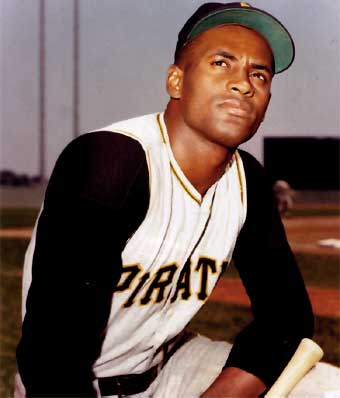
New documentary paints loving portrait of late Pirates' star

Sunday, April 20, 2008

Bernardo Ruiz has assembled a documentary of old broadcast moments and well-used commentators, but his one-hour "American Experience" film, "Roberto Clemente" (9 p.m. Monday, WQED), offers fresh faces and insights, too. It also pays proper homage to Clemente's beloved Puerto Rico, its people and to Nicaragua, his last chapter still largely unexplored.

From his unbringing in the sugar cane fields to his death in 1972, the Pirates' superstar right fielder has become iconic, in part because of his death on a failed flight one mile off the Puerto Rican shoreline. He was bound for Managua, Nicaragua, with supplies for victims of a leveling earthquake eight days earlier.

His body was never recovered.

Described by historian Samuel Regalado as "a complicated individual, because he stepped into some very complicated times," one could argue the Pirates' superstar was complicated regardless; all times are complicated.

He was artistic, musical and open to non-traditional practices, such as chiropractic. He had a sensitive and fiery mind, one so much more active than the average ballplayer's but impeded by delivery in English in a city that had not heard Spanish spoken on broadcasts, if at all.

In Puerto Rico, blacks and whites share the same culture. Here, he found the bewildering and damaging parallel universes that still exist -- maybe the only part of life in Pittsburgh he would recognize were he to come back.

Arguably the richest and most poignant film clip from any World Series clubhouse celebration is included in this film, from 1971: Bob Prince has grabbed the ebullient Clemente, the catalyst of the team's win, for an interview and, before answering, Clemente speaks briefly to his family in Spanish.

The film, narrated by actor Jimmy Smits, includes many interviews with friends, family, teammates historians and writers, including David Maraniss, who wrote "Clemente: The Passion and Grace of Baseball's Last Hero."

Steve Blass, the winning pitcher in the last game of the 1971 World Series, recalls Clemente walking up the aisle to him on the team airplane from Baltimore and saying, "Come here, Blass, let me embrace you."

"What cracked me up about Roberto was in a lot of interviews. ... he would start talking about life," says teammate Al Oliver, "and the writers just weren't ready for that."

Writers Roy McHugh and George Will comment on his eagerness to complain about what ailed him, which Mr. Will said put a lot of people off because it was unseemly for a ballplayer to bare his feelings.

Carol Bass was a girl when she approached Clemente for his autograph after a game, trying out her nascent Spanish and being regaled with a stream of Spanish in return. They became friends and, in fact, she was a guest of the family the night Clemente's doomed plane went down.

Vera Clemente recalls the look her husband gave her as he headed toward that plane: "He looked at me with a very sad look," she said. "I read many things in that look."

Historian Rob Ruck's comment that Clemente, near the time of his death, had blossomed into a man who would transcend baseball, set the stage for Osvaldo Gil's teary conclusion to the film.

Mr. Gil wondered what sense to make of his friend's death, and said his mother gave him "the only explanation that made sense," he said. "'If he had died as a player, only the sports fans would have remembered him. But because he died while helping others, the wider world would know him as a humanitarian.' "

Diana Nelson Jones can be reached at djones@post-gazette.com or 412-263-1626.
First published on April 20, 2008 at 12:00 am

Wednesday, April 2, 2008

CIRCA Puerto Rico ‘08 The First International Art Fair in the Caribbean - Mar 23, 2008

by Jesse Wanamaker
Click here for the original article

CIRCA Puerto Rico ’08, the first international art fair in the Caribbean and Central America, will be held from April 11 – April 14, 2008 at the new Puerto Rico Convention Center in San Juan, and will feature over 40 commercial galleries from Puerto Rico, Latin America, the United States, Europe, Canada, and Australia. CIRCA PR ’08 will once again bring the best of Contemporary art to a local and international audience of collectors. It is the only art fair of its kind in the Caribbean and Central America, where an important group of collectors has emerged in the past few years. In just three years, CIRCA PR has shown its potential to give new visibility to the Caribbean art world where an exciting mix of regional artists, galleries, institutions, and collectors, together with a selection of international galleries, offered a very personal and dynamic art fair.

Far from the madding crowds and the gigantism of most of the art fairs, at CIRCA PR we are convinced that an art fair should be small, intimate, and intellectually challenging. CIRCA continues with its humane scale in a friendly and sunny setting allowing gallerists, collectors and other art professionals to interact on a more personal one-to-one basis. Respected economist E.F.Schumacher once said “Small is beautiful”, hinting clearly to the most appropriate scale for an activity. And for us, size does really matter.

http://www.circapr.com

WHAT THE PRESS SAID ABOUT CIRCA ‘07:
• “the fair featured a great mix of dealers and independent thinkers that aren’t found at other art fairs” (Walter Robinson, artnet)
• “Puerto Rico has something unique to offer to the world, which is increasingly about money and seeing the same thing everywhere you go” ( Joel Weinstein, Flash Art)
• “CIRCA is shaping up to be an exciting initiative” (Amanda Coulson Tema Celeste)
• “Puerto Rico possesses one of the highest densities of collectors that I know of in the art world” (Fernando Galán Art.es)

PARTICIPATING GALLERIES
356 (San Juan), Air de Paris (Paris), Altamira (Gijon), Artspace Witzenhausen (Amsterdam), Blow de la Barra (London), Botello (San Juan), Breenspace (Sydney), brot.undspiele (Berlin), Spencer Brownstone (New York), Adora Calvo (Salamanca), Casas Riegner (Bogota), Marta Cervera (Madrid), Contemporary Fine Arts (Berlin), Carmen Correa Contemporaneo (San Juan), CR3MA (San Juan), Dean Projects (New York), Espacio Liquido (Gijon), Henrique Faria Fine Art (New York), Gavlak (West Palm Beach), Alfredo Ginocchio Arte Internacional (Mexico DF), Moti Hasson (New York), Hardcore Art Contemporany Space (Miami), Caprice Horn (Berlin), Jacob Karpio (San Jose, CR), Diana Lowenstein Fine Arts (Miami), Federico Luger (Milan), Katharine Mulherin Contemporary Art (Toronto), Museum 52 (London), Pan American Art Projects (Miami), Raquel Ponce (Madrid), Walter Otero (San Juan), Point of View (New York), PM Gallery (Toronto), El Museo/Fernando Pradilla (Bogota), Primer Piso (San Juan), Lyle O. Reitzel (Santo Domingo), Samson Projects (Boston), Schuebbe Project (Duesseldorf), Space Other (Boston), Spielhaus & Morrison (Berlin), Spinello Gallery (Miami), Storehouse Group(San Juan), Vane (UK), and Voges + Partner (Francfort).

THE CURATED ART FAIR
For the section In the Spot guest curators –among which Michel Blancsube from the Jumex Collection and Julieta Gonzalez from Espacio 1414- will put together a revolutionary concept-based exhibition from works exhibited at the fair; at the end of the day the curator will engage in a critical dialogue with the audience.

CHAMBRES DES COLLECTEURS and COLLECTOR’S PROGRAM
In response to the bourgeoning and dynamic artistic community, an important group of private collectors has emerged in Puerto Rico. In cooperation with these collectors and in hommage to Jan Hoet’s Chambres d’Amis (1986), the section “Chambres des Collecteurs” offers during CIRCA a unique possibility of visiting private collections. Our interesting and edgy collector’s program will offer visits to the following private collections: the Rosalia and Ugobono Collection with works by Melvin Martinez, Jonathan Meese, Guillermo Kuitca among others; Horacio Campolietto Collection with works by Erwin Olaf and Andres Serrano; in addition this year CIRCA will feature the opening of Luis Gutierrez Latin-American Photo Collection. Also on the VIP Programme is a visit to the exclusive “Country Club” Dorado Beach East in order to visit the Pepe Alvarez and Carlos Trapaga Collections. These are exciting collections you won’t miss that give a good idea of the collector’s vi
be on the island.

The VIP Program also hosts visits to artists’ studios, gallery walk, museum openings, and parties, in order to make Puerto Rico the ultimate experience for the visiting collector and art lover while enjoying the unique scene of Old San Juan and the incredible reggeaton parties. You can also enjoy the GOLF EXPERIENCE of a lifetime in one of the most celebrated courses in the Caribbean. A first for CIRCA, we invite you to tee off with us on April 15th, at 7:00am.For more information and bookings, call us at (787) 279-7675, or email us at info@circapr.com

About Circa Puerto Rico ‘08
CIRCA Puerto Rico ’08 is organized by Portfolio FIAC, Inc., a corporation founded by Roberto J. Nieves and Anabelle Lampón to serve as a leading cultural management company in the Puerto Rican and Caribbean communities.

CIRCA Puerto Rico ‘08 is sponsored by Caribbean Merchandiser Services, Caras, MCS, the Normandie Hotel, and the Puerto Rico Convention Center.
It is supported by: Museo de Arte de Puerto Rico, Instituto de Cultura Puertorriqueña, and Escuela de Artes Plásticas de Puerto Rico.

For more information please visit http://www.circapr.com